

NFIP Foundations

The NFIP classifies buildings based on their foundation type, which plays a critical role in determining flood risk, rating, and eligibility for coverage. The two mutually exclusive foundation classifications are elevated buildings and non-elevated buildings.
- Accurate classification of a building's foundation is essential for completing the NFIP application and ensuring proper coverage.
- Incorrectly identifying a foundation can lead to improper rating or coverage issues, potentially affecting claims processing.
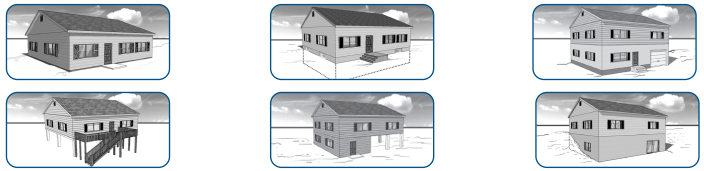
Review images of All NFIP Foundations
Non-Elevated Buildings
A non-elevated building is constructed on a foundation where the lowest floor is at or below ground level on all sides.
Common foundation types for non-elevated buildings include:
- Slab-on-grade
- Basement
- Crawlspace with the lowest floor below grade on all sides
These buildings are generally more susceptible to flood damage and may face higher premiums due to increased risk.
Elevated Buildings
An elevated building is constructed with the lowest floor above ground level, supported by a foundation that provides open space beneath the structure.
Examples of elevated foundations include:
- Piers or pilings
- Posts or columns
- Enclosed areas used solely for parking, storage, or building access
Elevated buildings are designed to minimize flood damage by reducing the risk of floodwaters reaching the primary living areas. They typically qualify for lower premiums because of their reduced risk profile.